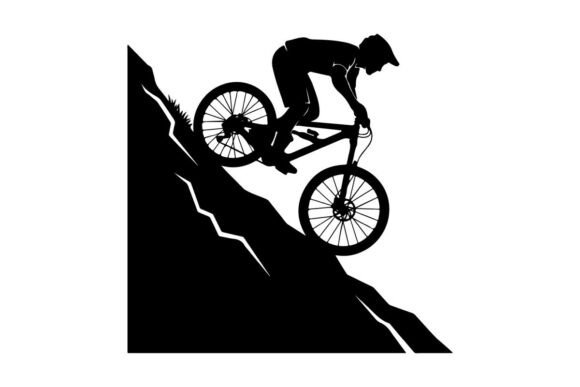
Mountain Biker Performing Jump on Rocky: Evaluating the Dynamic Silhouette for Modern Design Projects
Visual storytelling in action sports relies heavily on capturing the precise moment of peak intensity. The Mountain Biker Performing Jump on Rocky silhouette represents more than just a graphic element; it is a distilled representation of adrenaline, skill, and rugged terrain. For designers, marketers, and content creators, selecting the right visual asset involves balancing aesthetic appeal with technical versatility. This specific clip art style offers a unique blend of raw energy and clean design, making it a compelling choice for various creative applications.
When integrating such imagery into your workflow, it is essential to understand not only what the image depicts but how its structural qualities influence usability. Unlike photographic assets that may suffer from lighting inconsistencies or background noise, a professionally crafted vector silhouette provides a controlled, editable foundation. This article explores the distinct characteristics of this mountain biking graphic, compares it against alternative visual formats, and helps you determine if it aligns with your project’s specific needs.
Defining the Aesthetic and Technical Structure
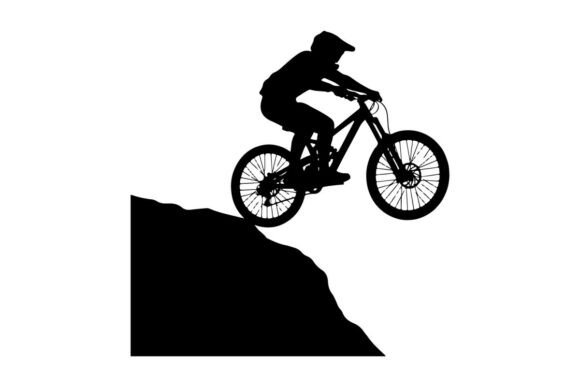
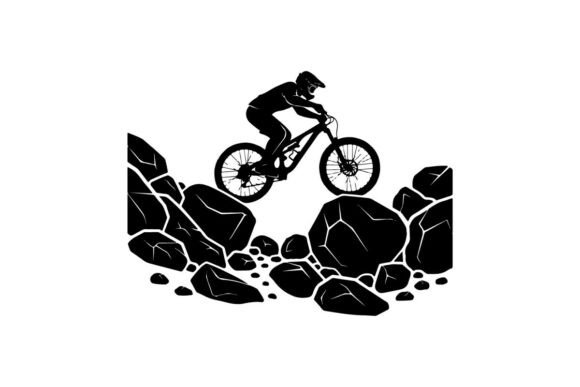
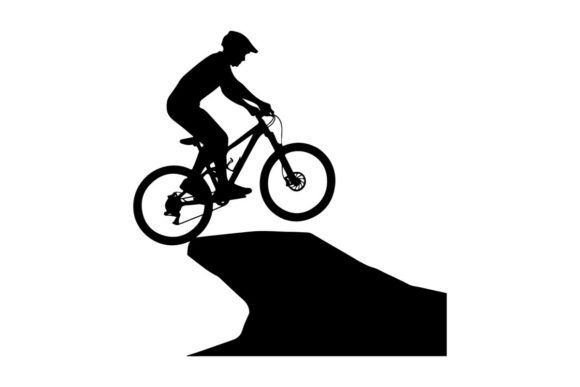
The core appeal of the Mountain Biker Performing Jump on Rocky lies in its simplification. By reducing a complex scene—a rider mid-air, bike angled, suspension compressed, over uneven stone—into a solid shape, the design removes distractions. This abstraction allows the viewer to focus entirely on the form and motion. The "rocky" element is crucial here; it provides context without clutter. A flat ground line would suggest a generic jump, but the jagged, irregular base of the rock formation communicates difficulty and outdoor authenticity.
From a technical standpoint, these assets are typically built using high-quality vector structures. This means the artwork is defined by mathematical paths rather than pixels. The benefit is scalability. Whether you are printing a small logo on a water bottle or designing a large-format banner for a sporting event, the edges remain crisp. There is no pixelation, blurring, or loss of detail. For professionals who require consistent branding across multiple mediums, this reliability is non-negotiable.
Furthermore, the "clean outline" approach ensures that the silhouette does not appear muddy when scaled down. Intricate details can get lost at smaller sizes, but a well-balanced silhouette maintains its recognizability. This makes it particularly effective for merchandise, app icons, or social media profile pictures where space is limited.
Comparing Silhouettes to Photographic and Illustrated Alternatives
Choosing between a silhouette, a photograph, and a detailed illustration depends largely on the intended message and medium. Each format has distinct strengths and tradeoffs.
- Photographs: Realism is the primary advantage of photography. It captures texture, color, and emotion authentically. However, photos often require significant editing to remove backgrounds, adjust lighting, or match brand colors. They can also feel dated quickly as fashion and equipment styles change. A photo of a biker might show specific gear brands, which could conflict with neutral branding goals.
- Detailed Illustrations: Hand-drawn or digital paintings offer artistic flair and unique character. They are excellent for editorial pieces or storytelling. The downside is complexity. Detailed illustrations can be visually heavy, competing with text or other design elements. They are also harder to edit; changing the color scheme often requires redrawing parts of the image.
- Silhouettes (Like Mountain Biker Performing Jump on Rocky): These offer maximum flexibility. They are timeless because they lack specific temporal markers like clothing trends. They are easy to recolor to match any brand palette instantly. The tradeoff is the loss of facial expression and fine detail. If the emotion of the rider’s face is central to the narrative, a silhouette may feel too detached.
For projects requiring quick recognition and versatile application, the silhouette often wins. It acts as a symbol rather than a literal depiction, allowing the audience to project themselves into the action.
Best-Fit Use Cases and Industry Applications
Understanding where this specific graphic shines helps in making an informed decision. The Mountain Biker Performing Jump on Rocky is not a one-size-fits-all solution, but it excels in several key areas.
Branding and Identity
For outdoor retailers, adventure tour operators, or extreme sports clubs, this image conveys core values: risk, excitement, and nature. Because the design is clean, it integrates seamlessly into logos. You can place it next to bold typography without creating visual chaos. The rocky base anchors the logo, providing a stable foundation for the dynamic upper element.
Merchandise and Apparel
Screen printing and vinyl cutting favor simple shapes. Complex gradients and thin lines are difficult and expensive to reproduce on fabric. A solid silhouette cuts cleanly and prints uniformly. This makes it ideal for t-shirts, hoodies, and stickers. The high contrast ensures visibility from a distance, which is vital for apparel design.
Digital Content and Web Design
In web headers or blog post featured images, silhouettes provide a modern, minimalist look. They load faster than high-resolution photographs and scale perfectly for responsive design across mobile and desktop screens. When used as an icon or bullet point marker, the small size retains clarity, enhancing user experience without slowing down page performance.
Evaluating Limitations and Decision Factors
While versatile, this style is not appropriate for every scenario. Before committing to this asset, consider the following limitations:
- Lack of Specificity: If you need to showcase a specific bike model or safety gear, a silhouette will obscure those details. It is a generic representation, not a product showcase.
- Emotional Nuance: Silhouettes cannot convey facial expressions. If the campaign relies on the joy, fear, or determination visible on the rider’s face, a photographic or illustrated approach may be more effective.
- Contextual Ambiguity: Without color or background, the setting is implied rather than shown. If the location (e.g., a specific famous trail) is part of the story, additional design elements may be needed to provide context.
Decision-makers should ask: Is the goal to evoke a feeling or display a fact? If the answer is feeling—energy, freedom, adventure—the silhouette is powerful. If the answer is fact—this specific bike, this specific location—other formats may serve better.
Integration Tips for Maximum Impact
To get the most out of the Mountain Biker Performing Jump on Rocky clip art, consider how it interacts with surrounding elements. Color choice plays a pivotal role. While black is standard, using brand colors can create cohesion. For example, a deep forest green might emphasize the nature aspect, while a bright orange could highlight energy and caution.
Layering is another effective technique. Placing the silhouette over a textured background, such as a subtle topographic map or a gradient sky, can add depth without sacrificing the clean lines of the vector. However, avoid overly busy backgrounds that compete with the shape. The strength of the silhouette is its simplicity; clutter undermines its impact.
Additionally, consider orientation. While the jump is dynamic, ensure it flows with the layout. In left-to-right reading cultures, a jump moving from left to right suggests progress and forward momentum. Reversing it might feel like regression unless intentionally designed for a specific compositional balance.
Final Thoughts on Selecting the Right Visual Asset
The Mountain Biker Performing Jump on Rocky silhouette is a robust tool for designers seeking efficiency and timeless appeal. It bridges the gap between artistic expression and practical utility. By offering a clean, scalable, and versatile format, it reduces production time while maintaining professional quality. However, it is not a replacement for photography when realism is required.
Ultimately, the choice depends on your project’s goals. If you need a flexible, modern, and easily adaptable graphic that communicates the spirit of mountain biking without the constraints of specific details, this silhouette is an excellent option. Evaluate your medium, audience, and message carefully. When used thoughtfully, this type of clip art can elevate your creative work, providing a polished look that resonates with audiences across various platforms and industries.